
 English
  Español
  Deutsch
  Dansk
Dansk  Italiano
  Français
  ελληνικά
  Nederlands
  Slovensko
 - An Innovative Health Initiative project · Grant agreement No. 101132847
IMPROVE___sb01
Making patient-generated
health data work for better
healthcare.
IMPROVE connects patients’ everyday health data with clinical data to
enable more personalised, preventive and value-based healthcare.
26
partner
organisations
10
countries
9
clinical pilots
5
disease areas
Healthcare doesn’t stop at the hospital.
Neither does patient data.
OUR VISION AND AMBITION. sb2
Patients already generate a wealth of health information.
IMPROVE puts it to work.
OUR VISION
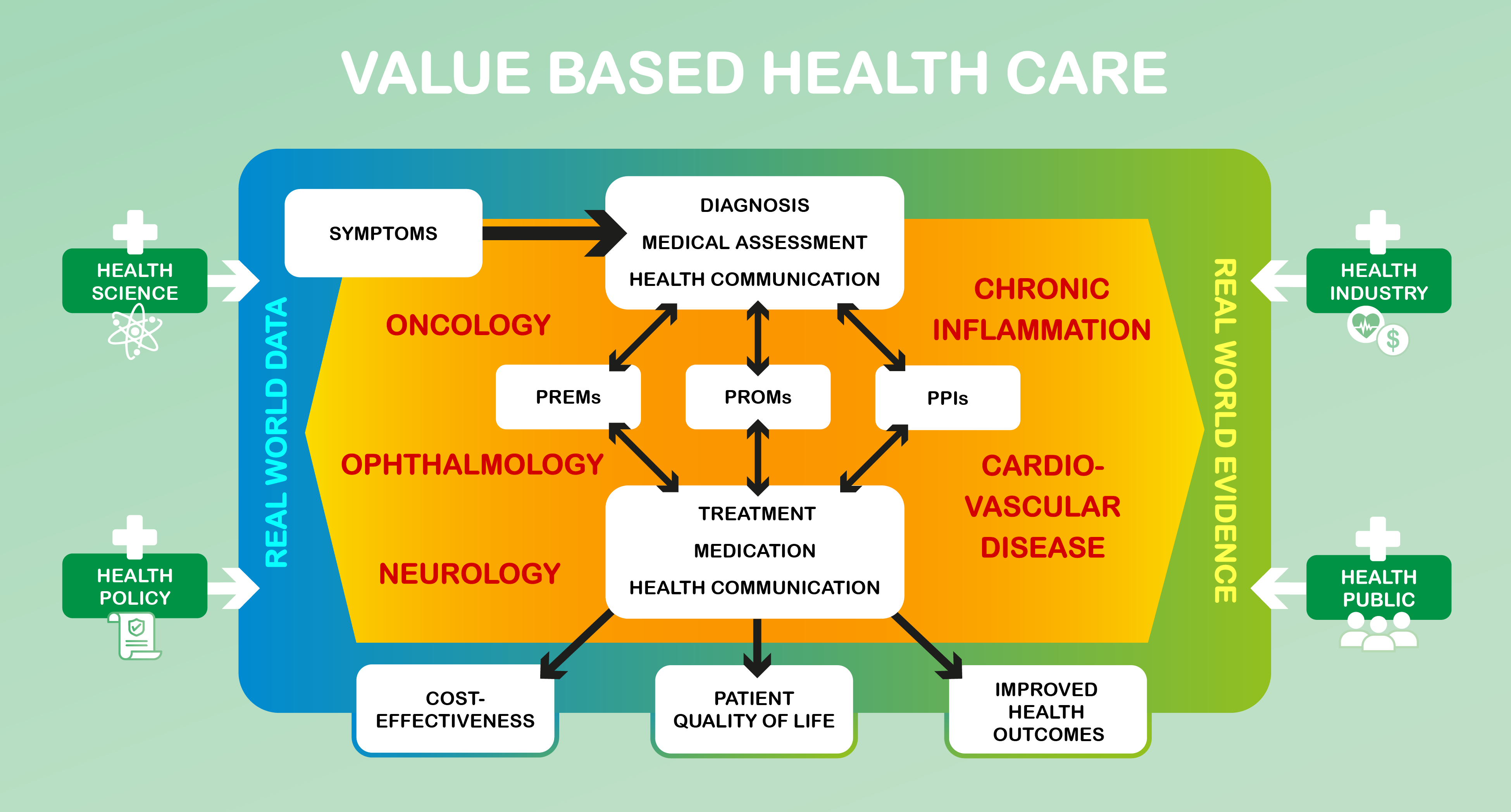
To IMPROVE the integration of in-clinic and out-of-clinic PGHD and experiences to harness VBHC through improving the use of PROMs, PPI, PREMs, and other PGHD to enhance healthcare enabling accelerated innovation of cost-effective and personalized patient journeys, based on accurate insight in health condition and treatment options in relation to foreseeable outcomes, patient experiences and preferences which are integrated for informed decision making by the patient, family members, and health care professionals.
OUR AMBITION
To develop a framework that makes PGHD actionable and enables healthcare systems to deliver greater value for patients, professionals and society.
WHY IT MATTERS
Bringing together patients’ everyday health data and clinical data gives a fuller, more complete picture of a patient’s health and needs. This enables:
- Better-informed clinical decisions
- More personalised treatment and care
- More effective healthcare planning and resource allocation
- A shift towards preventive, patient-centred and value-based healthcare
WHAT'S PGHD?
Patient-Generated Health Data is health-related information created, recorded or gathered by patients themselves, outside of a clinical setting, to help address a health concern. IMPROVE draws on four types of PGHD:
PROMs
Patient-Reported Outcome Measures — how patients say they are doing.
PREMs
Patient-Reported Experience Measures — how care was experienced.
PPI
Patient Preference Information — what patients value in a treatment.
Other PGHD
Digital health data and biomarkers from m-health and e-health tools.
WHY THIS MATTERS NOW. sb3
Care is becoming digital, but the data patients produce every day rarely
reaches the decisions that affect them.
36%
of the European population lives with a chronic disease, and chronic conditions account for 70–80% of healthcare system costs.
10.2%
of GDP is where OECD health spending is heading by 2030, up from 8.8% in 2018, driven by ageing populations and new technology.
1 in 4
people living in Europe could be 65 or older by 2050 — more demand for care, and fewer carers to provide it.
OUR APPROACH TO BETTER HEALTHCARE. sb4
Four pieces of work that build on each other.
 A platform for PGHD
A shared, interoperable environment for gathering and exchanging patient-generated health data alongside clinical data.
Nine clinical pilots
Different ways of collecting and exchanging PGHD, tested in real care settings across five disease areas and six countries.
The Knowledge Warehouse
IMPROVE’s evidence base for PGHD: a scientific, a practices and a policy tracker. Publications are screened through multi-expert Screenathons with an active-learning AI model — around 490 curated papers out of more than 24,000 records.
The stakeholder Toolbox
Practical tools, tailored to each stakeholder group, for putting IMPROVE’s methods and models into everyday practice.
The IMPROVE Living Lab.___sb05.
Not a single study — the shared environment where evidence, stakeholders and clinical practice meet.

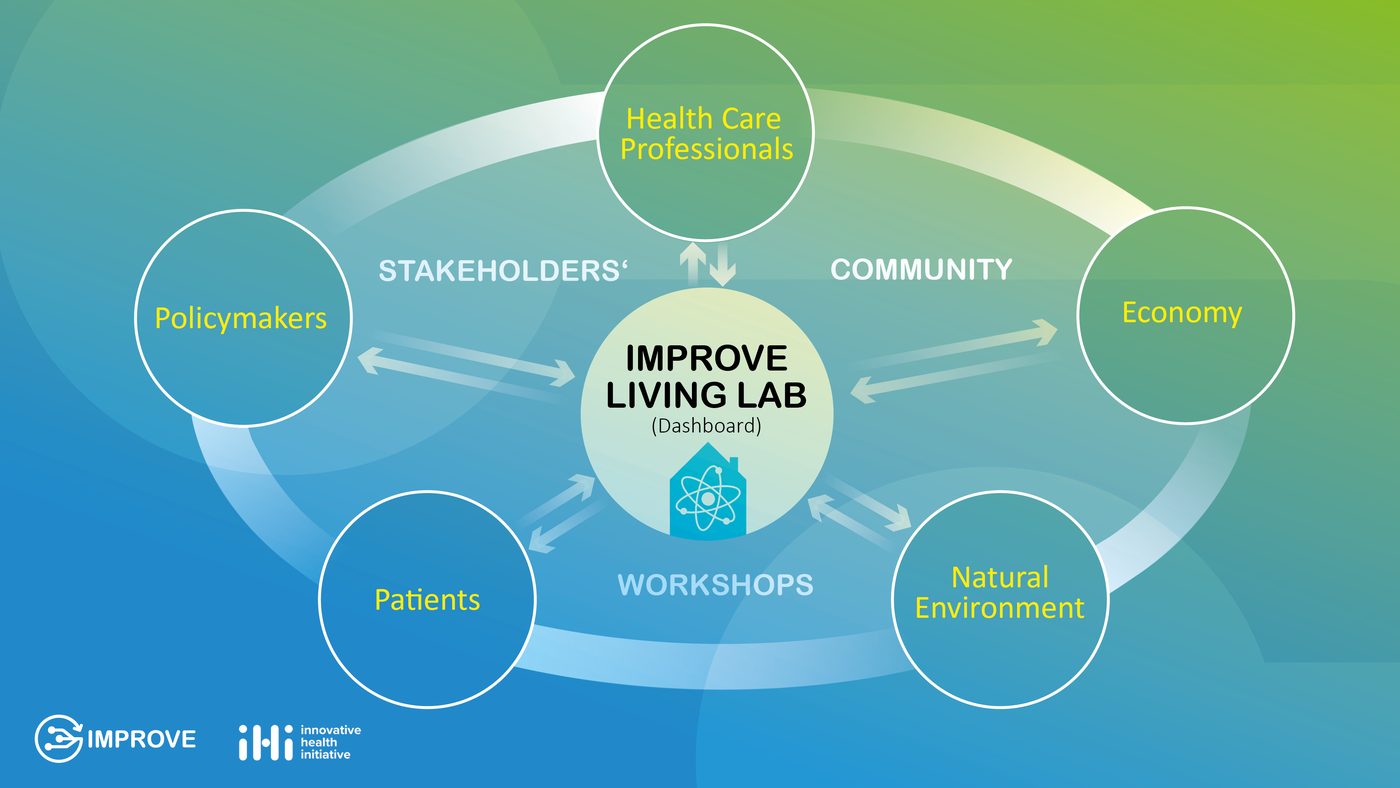
The Living Lab is the real-world environment in which IMPROVE is developed and tested. It is where the evidence base, the people who use it and the clinical pilots come together, guided throughout by user-centred design so that the result is functional for every stakeholder group — patients, health care professionals, researchers, policymakers and industry.
It shares live information from the pilots, integrates the scientific, policies and practices trackers, and hosts the data dashboard. Feedback from workshops and co-design sessions flows straight back into the framework.
icon Marleen icon
Stakeholders’ community
A standing community of patients, health care professionals, policymakers and industry, engaged through workshops and co-design sessions across the project.
icon Marleen icon
Knowledge Warehouse
A curated, regularly updated base of scientific evidence, care practices and policies, searchable through the scientific, policies and practices trackers.
icon Marleen icon
IMPROVE Pilots
Nine clinical use cases in five disease areas, where different ways of collecting and exchanging PGHD are tested in routine care.
top___sb06
Five perspectives
Patient
Lived experience, outcomes and preferences.
Clinical
Diagnosis, treatment and follow-up in routine care.
Healthcare
Services, pathways and resource allocation.
Industrial
Devices, therapies and digital health solutions.
Public health policy
Population health and system priorities, including evidence standards, approval and governance.
IMPROVE PILOTS. sb07
Innovation matters only when it works in real hospitals.
Different concept of gathering and exchanging PGHD will be tested with the help of nine case studies from five different disease areas in six different countries.
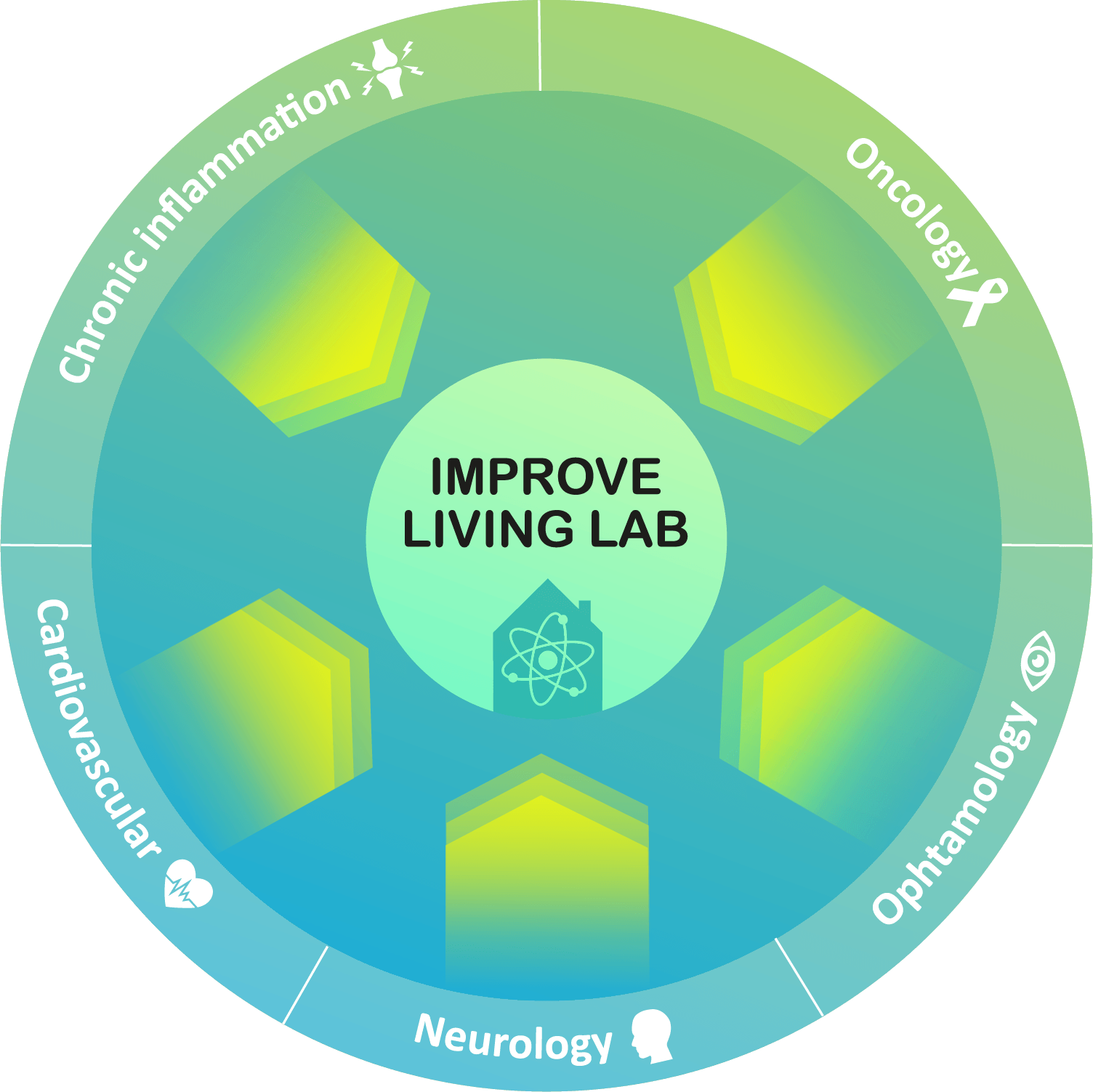


Nine pilots, five disease areas, six countries.
Each pilot is led by a consortium partner in a routine clinical setting.
Prostate Cancer (PMS)
Systems for automated radiotherapy trial Quality Assurance applied to prostate cancer. Lead: Philips Medical Systems, The Netherlands.
Cervical Cancer (PMS)
Multicentre quantitative imaging biomarkers to harness outcome parameters relevant for cervical cancer patients. Lead: Philips Medical Systems, The Netherlands.

Head and Neck Cancer (UDUS)
The Head and Neck Cancer use case covers the full spectrum of Head and Neck Squamous Cell Carcinoma (HNSCC) patients and engages multiple stakeholders to assess the implementation and value of patient-generated health data in routine clinical practice. Lead: Heinrich Heine University Dusseldorf.

Breast Cancer (DEDA)
The Breast Cancer Use Case focuses on the systematic integration of Patient-Generated Health Data, with particular reference to Patient-Reported Outcome Measures, Patient-Reported Experience Measures and Patient Preference Information, into the care pathway of patients with early-stage breast cancer within the Apulia Regional Oncology Network. Lead: Dedalus Italia.
Macular Degeneration (IER)
Age-related macular degeneration can result in significantly decreased vision, subsequently impacting a patient’s independence with activities of daily living, social relationships, financial security, and general mental well-being. IER, ROCHE, and EYE intend to apply PGHD with wet MD in a real-world clinical setting. The aims are to understand the experience and motivation of patients in relation to age, sex, level of vision, and management. Lead: Institute for Economic Research, Slovenia.
Cardiovascular (IER)
Value-Based Healthcare framework for patients with chronic heart failure and coronary artery disease. The objective of this case study is to establish a Value-Based Healthcare (VBHC) framework for cardiovascular patients in Slovenia, with a specific focus on two diagnosis groups: heart failure (HF) and coronary artery disease (CAD).
Severe aortic stenosis (MDT)
This use case focuses on patients with severe aortic stenosis undergoing Transcatheter Aortic Valve Implantation (TAVI) in the Interventional Cardiology Department at Vall d’Hebron University Hospital in Barcelona. It aims to advance the care pathway digitalization through the implementation and validation of a remote patient monitoring platform that improves the continuity of care, supports clinical decision-making, and empowers patients before and after the intervention. Lead: Medtronic Iberica.

Multiple Sclerosis (FISM)
Value-Based Healthcare (VBHC) framework for Multiple Sclerosis (MS) rehabilitation. The objective of this case study is to create the VBHC framework for multiple sclerosis subjects, in particular focused on a target population of young patients (≤ 40 years old) with a relapsing remitting disease course or progressive disease course. Lead: Fondazione Italia Sclerosi Multipla.

Chronic Rhinosinusitis (UDUS)
The topic of Chronic Inflammation IHI IMPROVE Case Study focuses on Chronic Rhinosinusitis (CRS). CRS is a very widespread disease affecting more than 10 % of the population in Europe. Broad evaluation should be performed not only in study situations but in real world patient treatment. Applying this use case faces the whole spectrum of CRS patients as well as different kinds of stakeholders. Lead: Heinrich Heine University Dusseldorf.
Knowledge Warehouse and Screenathon. sb08
Evidence becomes valuable only when it is accessible.
The Knowledge Warehouse is IMPROVE’s evidence base for patient-generated health data (PGHD), combining a scientific tracker, a practices tracker and a policy tracker. Publications are screened via the multi-expert Screenathon method, accelerated by an active-learning AI model (ASReview V2); over 24,000 records screened across 11 disease areas yielded around 490 curated publications. Mapped European practices and policies further inform clinical decisions and new studies related to PGHD.
>24,000
records screened across 11 disease areas, accelerated by an active-learning AI model (ASReview V2).
~490
curated publications, assessed by multiple experts through the Screenathon method.
3 trackers
for science, practices and policy, comparing regions and countries.
Continuously updated
with new evidence, new practice and user feedback throughout the project.
THE PLATFORM. sb09
Data become knowledge when they support decisions.
The IMPROVE Platform brings together patient-generated health data and clinical data alongside a curated knowledge base of scientific evidence, care practices and regulations. Clinicians, patients, researchers and industry explore and visualise this data via the dashboard, supported by an AI chatbot within the Decision Support System. Together, this supports decision-making across the patient journey and embeds value-based healthcare.
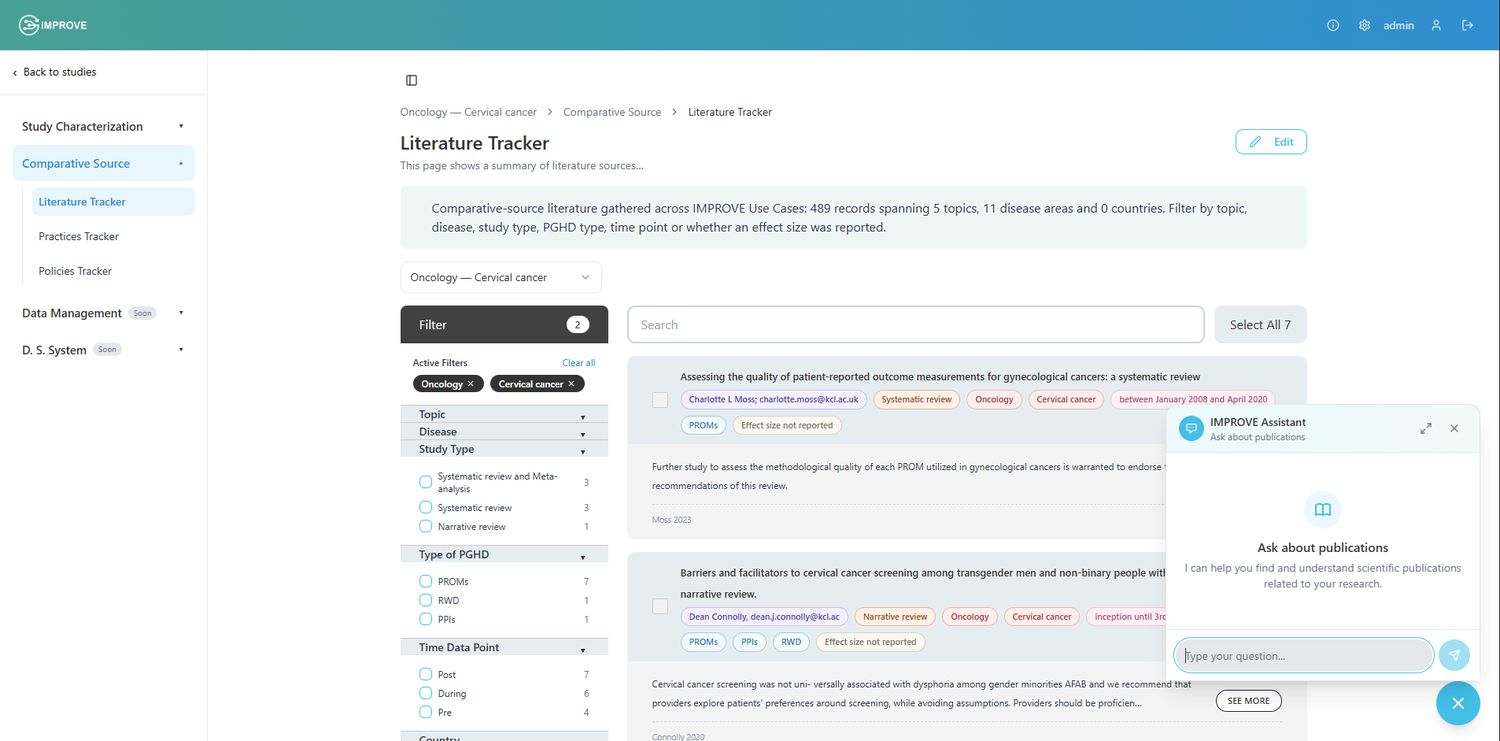
The Literature Tracker in the IMPROVE dashboard, with the AI assistant open.
THE TOOLBOX. sb10
Innovation creates impact only when stakeholders can use it.
The IMPROVE Toolbox is a stakeholder-oriented set of tools, built on the stakeholder engagement toolbox developed in the MULTI-ACT project. Rather than one general guide, it holds different tools for different stakeholder groups, each matched to what that group actually needs from patient-reported data — with particular attention to exposure–response relationships and causation.
Key benefits Marleen icon häckchen
- What each stakeholder group gains from using IMPROVE’s tools, methods and models.
- Where patient-reported data changes a decision, and how much difference it makes.
- Concrete entry points for adopting value-based healthcare in an existing service.
MEDIA AND RESSOURCES sb11

Videos
Short explainers on PGHD,the pilots and the platform
Infographics
The ecosystem, the Living Lab and the disease areas at the glance
Newsletter
Project updates two to three times a year, straight to your inbox
Publications
Peer reviewed papers, press releases and public project documents
Stay with improve_sb12
Subscribe to our Newsletter

Coordinator:
Universidad Politecnica de Madrid
Calle Ramiro de Maeztu 7
Edificion Rectorado
Madrid 28040, Spain
ABOUT | MEDIA | DOCUMENTS | NEWSLETTER |CONTACT | LANGUAGE 

This project is supported by the Innovative Health Initiative Joint Undertaking (IHI JU) under grant agreement No. 101132847. The JU receives support from the European Union’s Horizon Europe research and innovation programme and COCIR, EFPIA, EuropaBio, MedTech Europe, Vaccines Europe, and the contributing partners